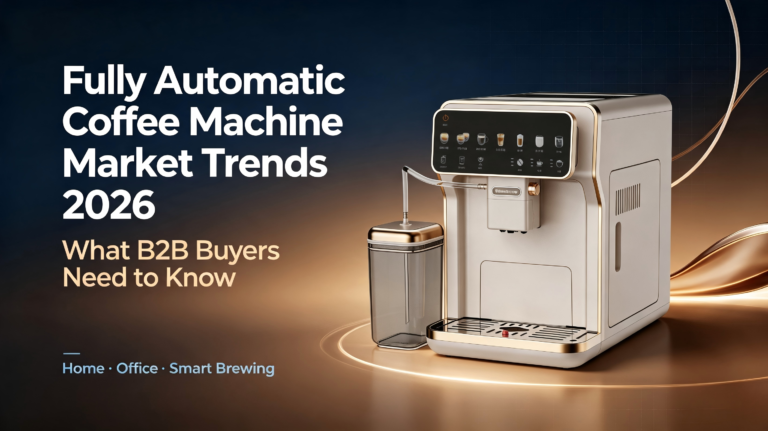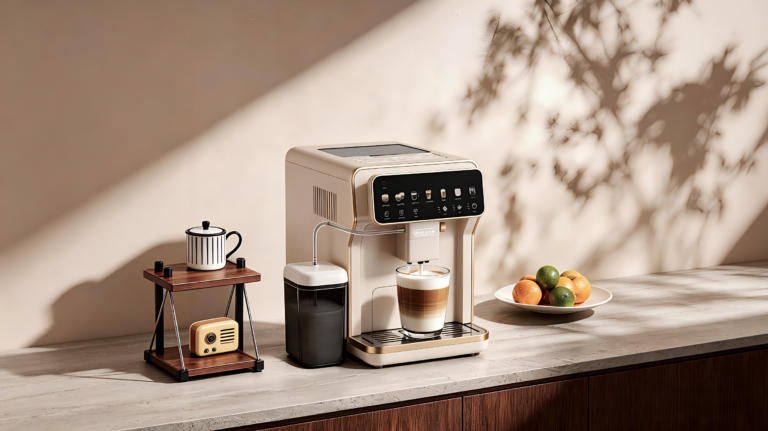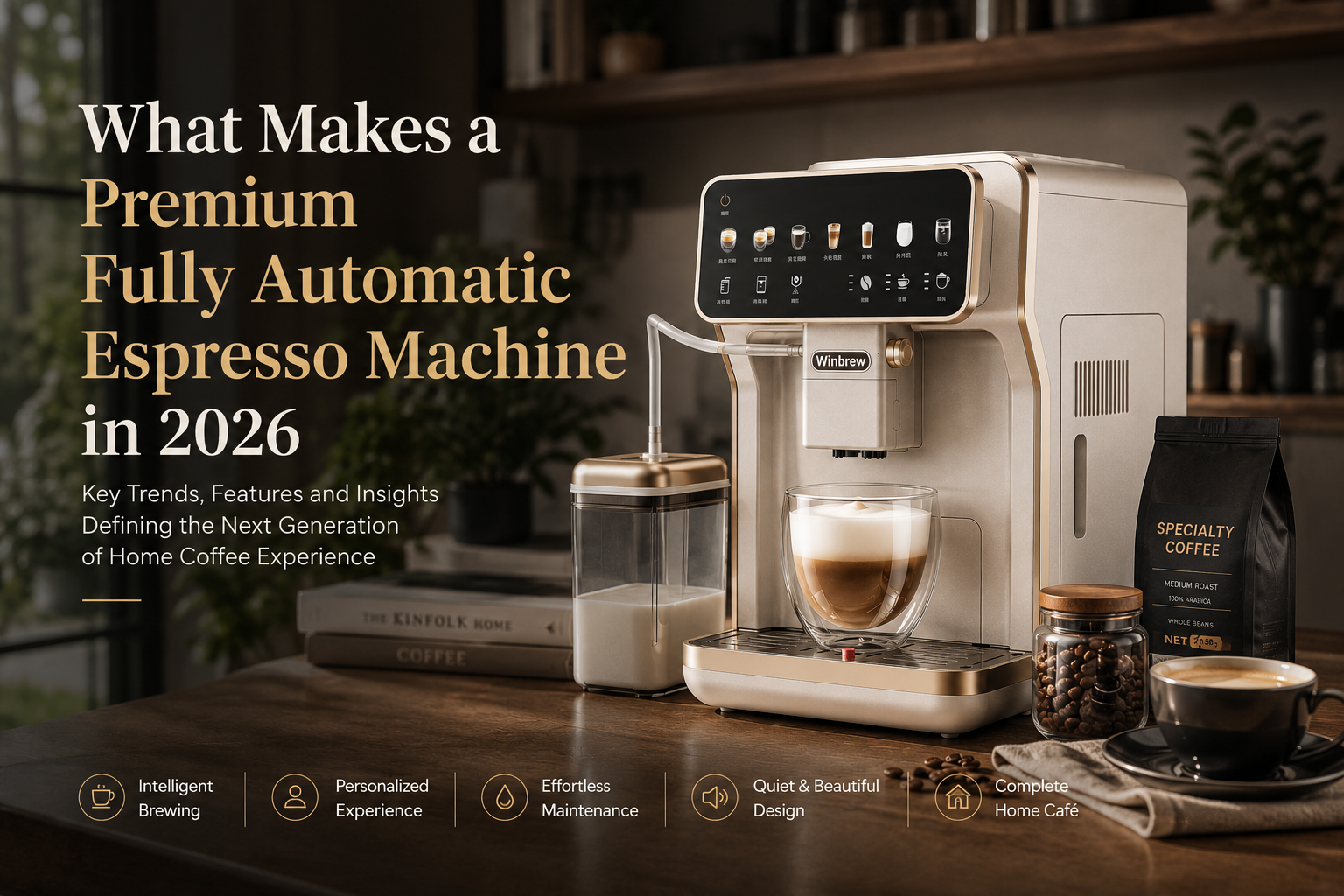
What Makes a Premium Fully Automatic Espresso Machine in 2026?
The premium fully automatic espresso machine market is changing fast. Buyers today are not simply asking "does it make good espresso?" They are asking "does it fit my life?" Too many machines still compete on specs alone — and that gap between features and experience is exactly where brands are losing ground.
In 2026, a premium fully automatic espresso machine is defined less by hardware specifications and more by the complete ownership experience it delivers. The machines winning market share combine consistent bean-to-cup quality, meaningful personalization, low-friction cleaning, quiet operation, and thoughtful design — all in a package that feels like it belongs in a modern home, not a commercial kitchen.
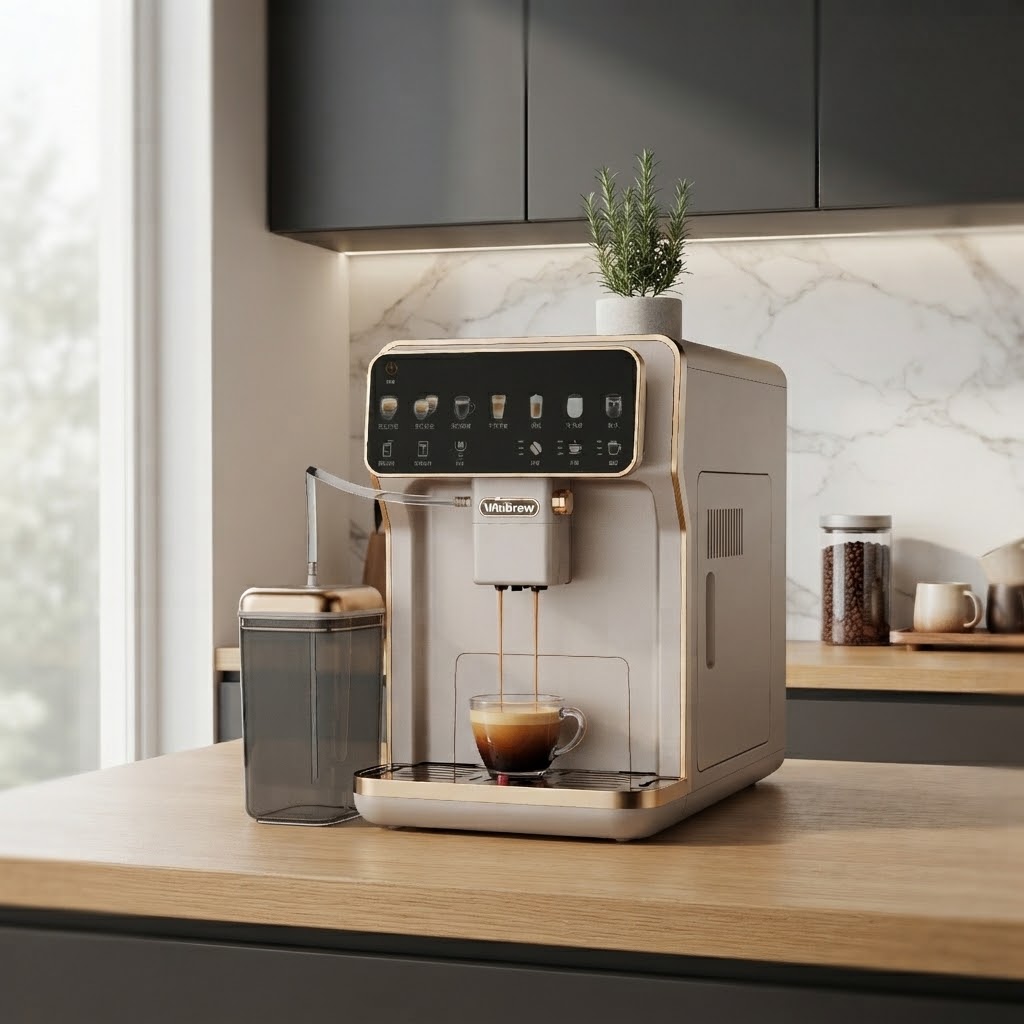
That answer is simple. But what it takes to deliver that experience — from grinder calibration to steam system engineering to app integration — is far more layered. Let me break down what actually separates a category-leading machine from a forgettable one in 2026.
From One-Touch Convenience to Personalized Coffee
One-touch brewing was once the entire value proposition of automatic espresso machines. Today, it is the baseline — not the differentiator. Buyers who pay a premium price now expect the machine to learn their preferences, not just execute a preset program.
Personalization is no longer a luxury feature. It is becoming the primary reason consumers choose one premium fully automatic espresso machine over another. Machines that allow users to save individual profiles, adjust grind size and temperature per drink, and recall preferences by user or time of day are setting a new market standard.
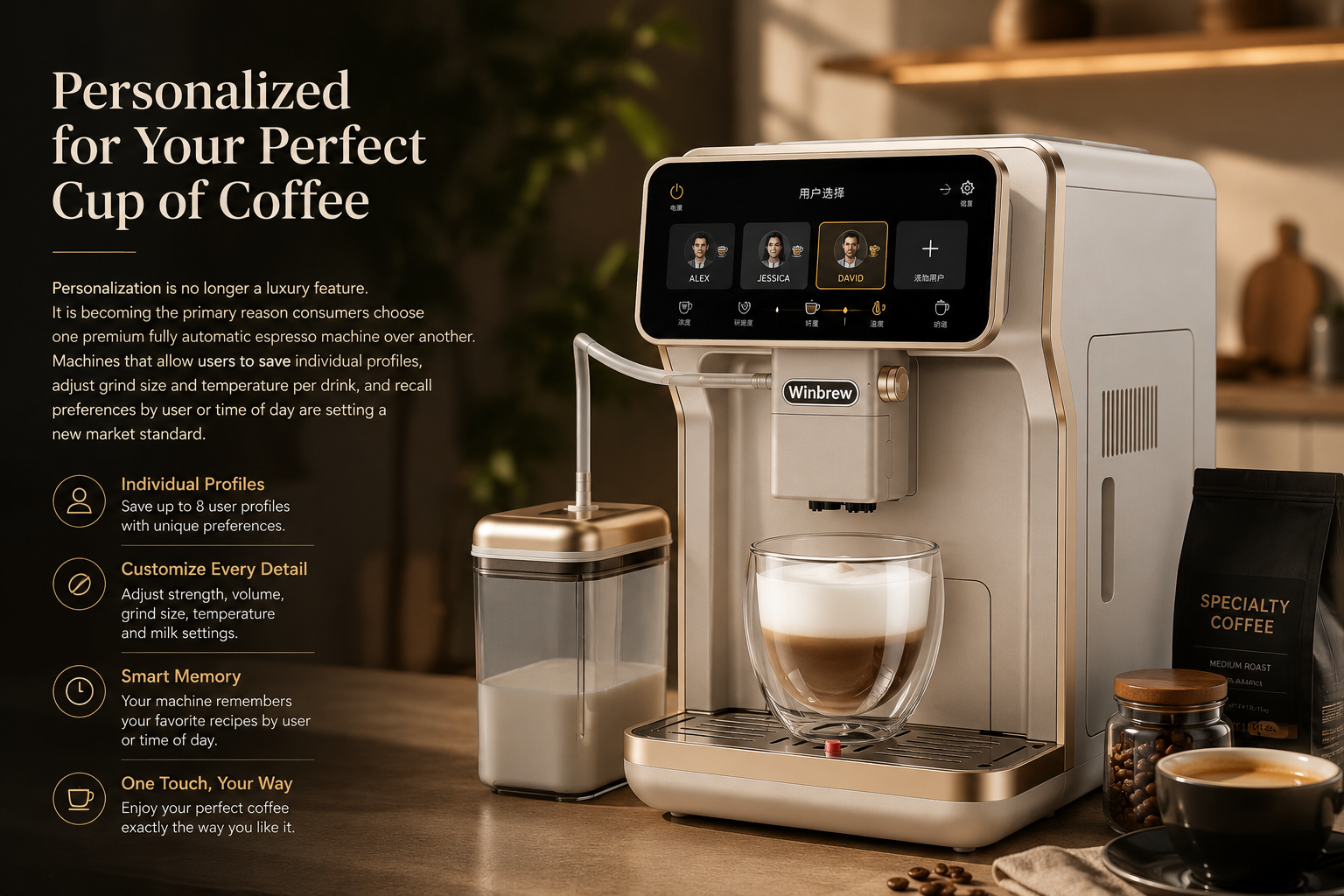
The shift from automation to individualization is one of the most commercially important trends in this category right now.
Why Does Personalization Matter Commercially?
Consider how households actually use these machines. A couple may have entirely different coffee preferences — one prefers a long, mild lungo at 7am, the other a short, intense ristretto after lunch. Children or guests may use the machine too. A machine that forces everyone to re-configure settings every time creates friction. A machine that remembers creates loyalty.
Brands like De'Longhi's Dinamica Plus and Jura's E8 have addressed this directly with multi-user profile systems. The Jura E8 (2024 update) supports up to 10 saved drink profiles. De'Longhi's LatteCrema system lets users adjust milk texture per drink type. These are not gimmicks — they are direct responses to how real households consume coffee.
From a product development standpoint, this creates a clear design brief:
- How many user profiles does the UI support?
- Can grind fineness, water temperature, and pre-infusion time be saved per user?
- Is the personalization interface intuitive enough that non-technical users will actually use it?
The last point is often where execution fails. I have seen machines with deep customization buried three menu layers deep — effectively invisible to the average user. Good personalization design means surfacing the right controls at the right moment, not overwhelming the user with options.
The Role of Connectivity
Smartphone app control is increasingly standard at the premium tier. Siemens EQ9+ and Philips 5400 LatteGo both offer app-based recipe management. By 2026, app connectivity is less about novelty and more about completing the personalization promise — allowing users to create, store, and share recipes outside the machine's own interface.
However, connectivity should support the coffee experience, not define it. Machines that require an app to perform basic functions frustrate users. The best implementations use the app as an optional layer on top of an already-excellent onboard experience.
Beyond Pressure: The Rise of Intelligent Bean-to-Cup Brewing
Pressure has been the dominant marketing metric for espresso machines for decades. Nine bars became the industry shorthand for "proper espresso." But specialty coffee culture has shifted the conversation — and premium automatic espresso machines are following.
Bean-to-cup brewing is gaining momentum because it eliminates the freshness compromise of pre-ground coffee while maintaining the convenience of full automation. In 2026, the quality of the integrated grinder, brew temperature management, and pre-infusion control are more meaningful quality indicators than bar pressure alone.
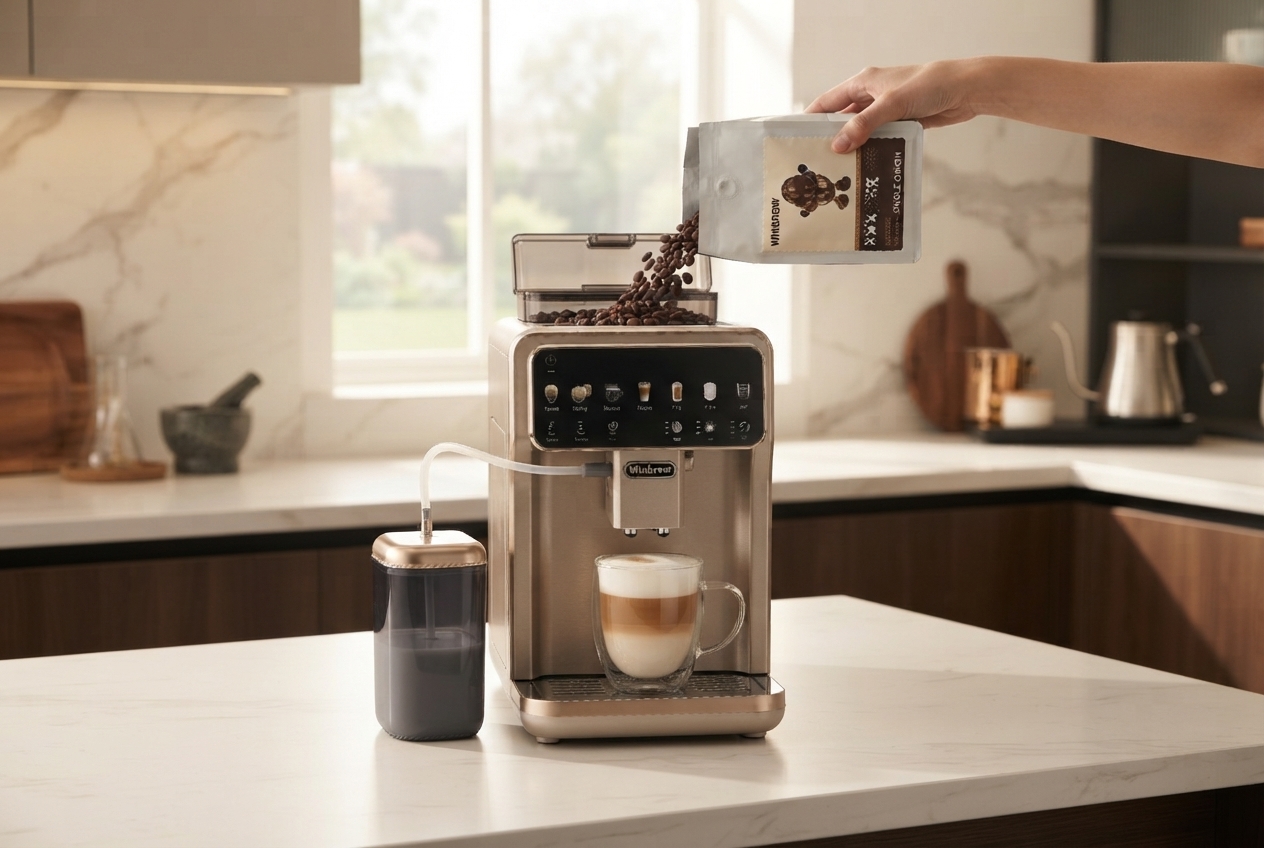
This matters because most premium buyers are becoming more coffee-literate. They are reading about single-origin beans, watching barista content on YouTube, and visiting specialty cafés. When they bring a machine home, they bring higher expectations with them.
What Actually Affects Cup Quality?
| Factor | Why It Matters | What to Look For |
|---|---|---|
| Grinder type | Burr grinders produce uniform particle size; blade grinders do not | Conical steel burr vs. flat burr |
| Grind fineness settings | More settings = better control over extraction | 10+ discrete steps |
| Brew temperature control | Water temperature affects extraction chemistry; ±1°C precision matters | Thermoblock vs. dual boiler |
| Pre-infusion | Gentle pre-wetting of grounds reduces channeling | Adjustable duration |
| Brew pressure | 15-bar pumps with pressure profiling beat fixed 9-bar systems | Adjustable or profiled pressure |
Brands competing at the €800–€1,500 retail price point are increasingly equipping machines with steel conical burr grinders over ceramic flat burrs — prioritizing durability and heat retention over raw cost savings. The Gaggia Cadorna Prestige and Melitta Caffeo Barista TS Smart are good examples of mid-premium machines that make grinder quality central to their marketing.
The Home Café Lifestyle Shift
This technical evolution reflects a deeper behavioral trend: the home café is no longer a cost-saving substitute for the local coffee shop. It is becoming a daily ritual with its own identity. I speak to customers who are genuinely invested in dialing in their grind, experimenting with different origins, and comparing extraction results.
This shift changes what "premium" means. A machine that delivers a reliably excellent espresso from quality beans — without requiring barista expertise — is worth more to this buyer than a machine with a longer feature list and mediocre extraction.
For brands, this is a meaningful product brief. The engineering challenge is not adding more features. It is achieving café-grade extraction consistency in a fully automatic, consumer-operable format.
Premium Ownership: Why Cleaning and Maintenance Matter More Than Ever
Here is an honest observation: cleaning is the most underrated differentiator in the premium fully automatic espresso machine category. It is also the most common reason owners abandon their machines.
Premiumization in 2026 is shifting from expensive hardware to better ownership experience — and nothing shapes that experience more directly than how easy the machine is to clean. Machines with fully removable brew groups, self-cleaning milk systems, and clear maintenance prompts retain users at dramatically higher rates than machines that make cleaning a chore.
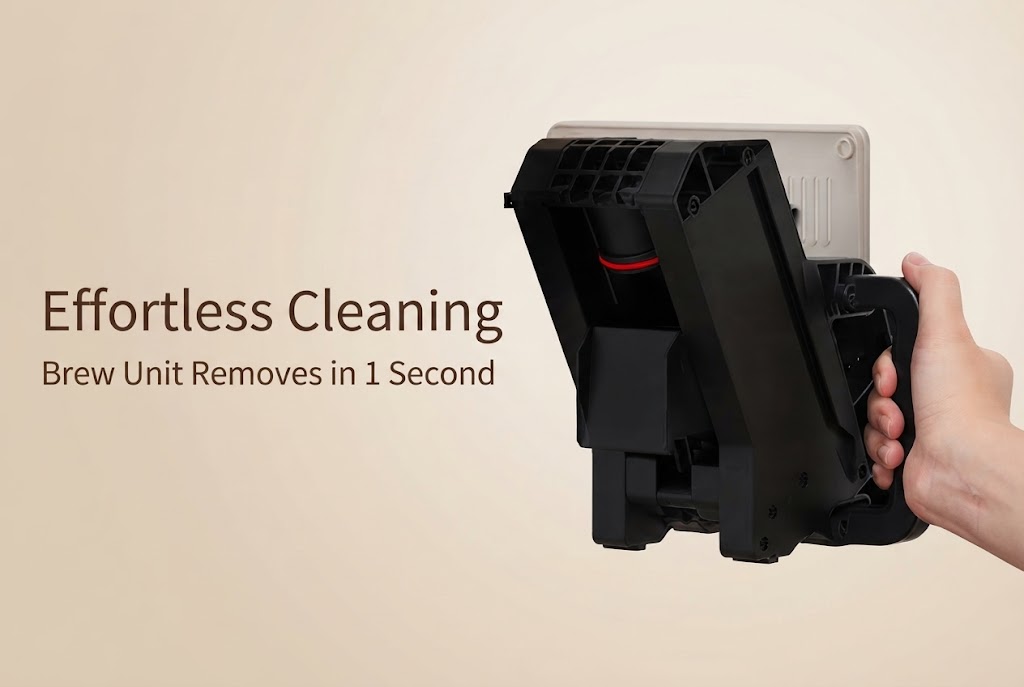
I work with a factory that holds an invention patent specifically for a fully detachable brewing system — and the commercial logic is straightforward. A machine that users can clean confidently is a machine they keep. A machine that accumulates residue invisibly is a machine they eventually stop using and eventually return or replace.
The Hidden Cost of Poor Cleaning Design
Consider the milk system. Automatic milk frothing is one of the most desired features at the premium tier. It is also the component most likely to be neglected or misused.
- Fully automatic milk systems (integrated carafe, self-cleaning cycle) command a premium but dramatically reduce user error.
- Manual steam wand systems offer more control but require deliberate daily cleaning — a habit most home users do not form reliably.
- Half-automatic approaches (automatic froth delivery, manual cleaning required) fall in the middle and often produce the worst user experience.
The De'Longhi LatteCrema Hot and Jura's AISB (Automatic Integrated Specialty Brewing) milk systems are widely cited for their cleaning ease. Both use automatic rinse cycles after each use. Both reduce the number of user-initiated cleaning steps. This is not accidental — it is deliberate experience design.
Maintenance Transparency
Beyond physical cleaning, premium machines now increasingly use active maintenance reminders — prompting descaling cycles based on actual water hardness and usage data, not just fixed time intervals. The Siemens EQ900 (2023–2025 production run) uses a TFT display to walk users through each maintenance step with visual guides.
From a product development perspective, cleaning design deserves the same engineering investment as the brew system. Brands that treat maintenance as an afterthought will pay for it in returns, negative reviews, and eroded brand equity.
Designed for Modern Living: Quiet, Intuitive and Beautiful
A €1,000+ machine sits on a kitchen counter permanently. That means it is a design object before it is an appliance. And in 2026, it increasingly needs to operate quietly enough to use at 6am without waking the household.
Noise level, interface quality, and industrial design are becoming meaningful purchase criteria for premium fully automatic espresso machine buyers — particularly in European markets where compact kitchens, open-plan living, and sustainability expectations shape product development priorities.
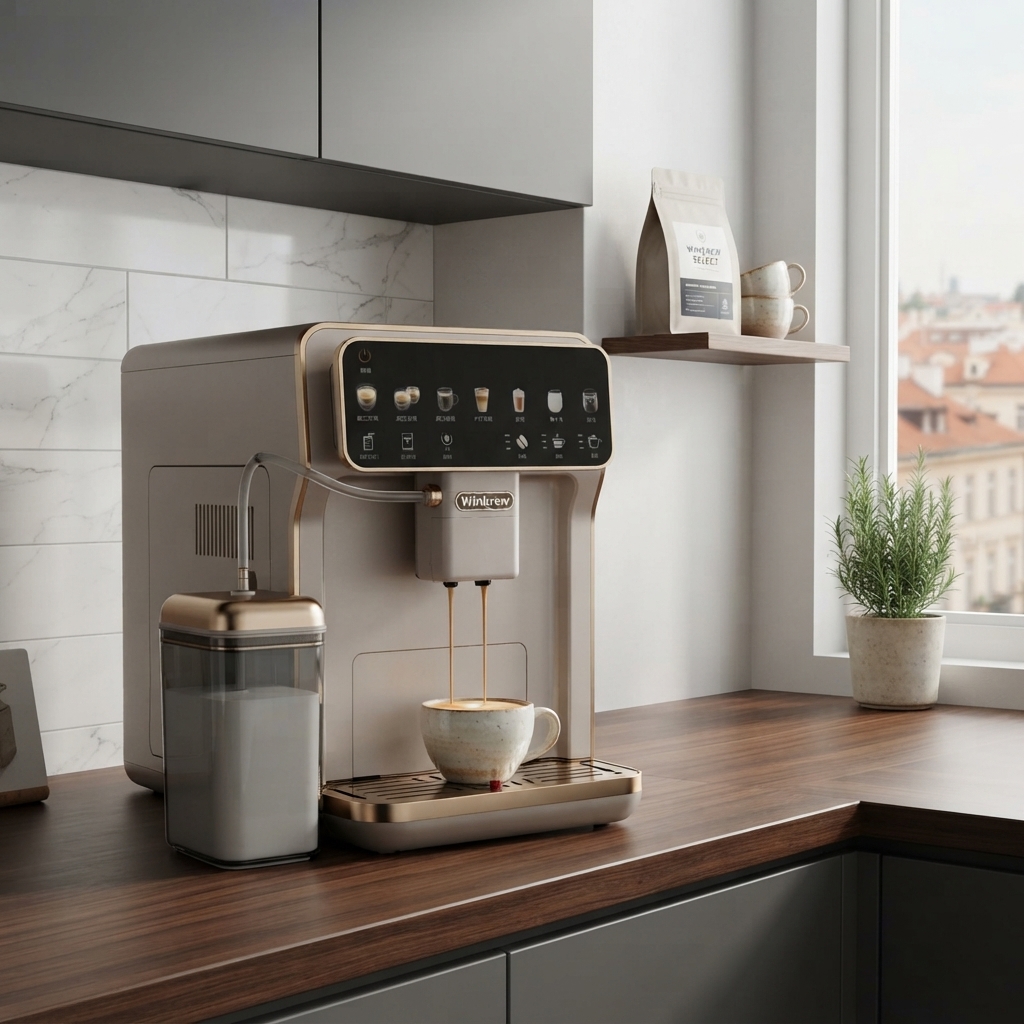
These are not soft marketing concerns. They are hard engineering and design specifications that affect whether a product earns its price point in the market.
Noise: The Overlooked Specification
Grinder noise is the dominant acoustic issue in fully automatic machines. A steel burr grinder running at high RPM in a quiet morning kitchen is genuinely disruptive. Some premium machines now specifically engineer for quieter operation:
- Reduced motor speed with compensating grind time
- Acoustic dampening materials around the grinder housing
- Vibration isolation between the grinder and chassis
The Miele CM6 series is frequently cited in European consumer reviews for relatively low operating noise. It is not a coincidence that Miele's core European customers often live in apartments with open kitchen-living spaces.
Interface: Less Is More
Touch displays are now standard at the premium tier. The relevant design question is not "does it have a screen?" but "how many taps does it take to get a coffee?"
Premium interface design in 2026 trends toward:
- Large, high-contrast displays visible in morning light
- Home screen shortcuts for the user's most frequent drinks
- Progressive disclosure — basic operation is simple; advanced settings are available but not forced
Sustainability and European Market Expectations
European buyers increasingly factor energy consumption, recyclability, and product longevity into purchase decisions. Machines with standby energy reduction modes, repairable component architecture, and spare parts availability commitments are better positioned in markets like Germany, the Netherlands, and Scandinavia.
For B2B brands entering or expanding in European markets, this is a product and supply chain decision, not just a marketing message. It affects materials selection, warranty program design, and after-sales infrastructure.
From Coffee Machine to Home Café Experience
The most commercially significant shift in this category is not a feature. It is a buyer mindset change. Consumers who once bought a fully automatic espresso machine as a convenient appliance now buy it as the centerpiece of a daily ritual.
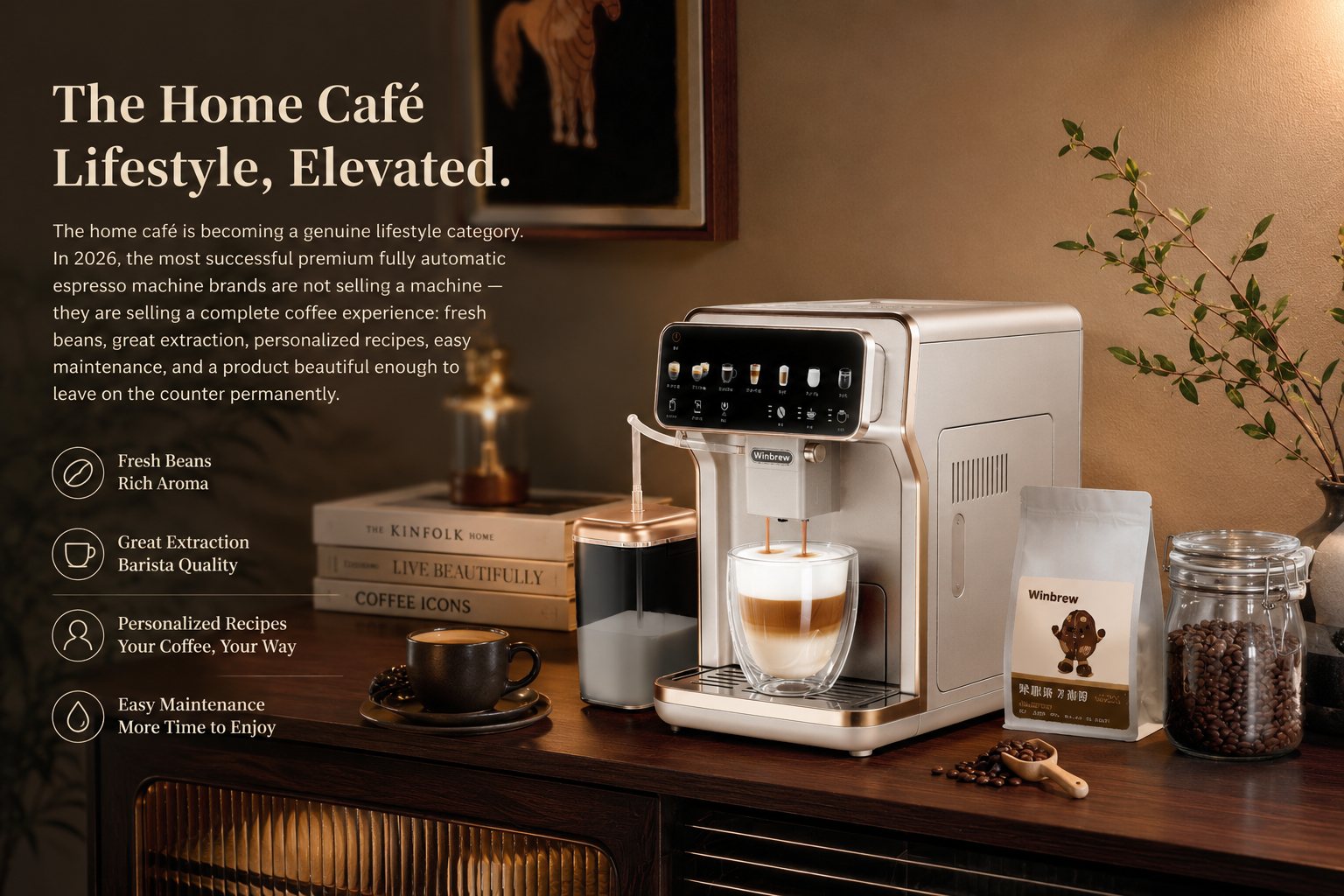
The home café is becoming a genuine lifestyle category. In 2026, the most successful premium fully automatic espresso machine brands are not selling a machine — they are selling a complete coffee experience: fresh beans, great extraction, personalized recipes, easy maintenance, and a product beautiful enough to leave on the counter permanently.
This reframing has direct implications for how brands should develop, position, and sell at the premium tier.
What a Home Café Experience Requires
The product must do several things well — not just one or two:
- Deliver consistent extraction quality across different beans and roast levels
- Support milk-based drinks with a system that is both capable and easy to clean
- Allow personalization without requiring a manual to navigate
- Operate quietly and look good on the counter
- Prompt and guide maintenance so performance stays consistent over years, not just months
No single feature achieves this. It requires coherent product architecture — engineering, UX, industrial design, and after-sales experience working in alignment.
The B2B Product Development Opportunity
For brands and distributors evaluating machine sourcing in 2026, the key question is not "what features can we add?" It is: "Where does our target buyer currently experience friction, and which of those friction points can we eliminate at a commercially viable cost?"
Milk cleaning friction, grind noise, and personalization depth are consistently the areas where mid-premium machines fall short of consumer expectations. These are also areas where differentiation is achievable without engineering the machine from scratch.
Manufacturers with modular, patented brew group designs — like the fully detachable brewing systems our factory has developed — offer brand partners a meaningful advantage here. The ability to clean and reassemble a brew group without tools reduces service calls, improves user satisfaction scores, and supports a longer product lifecycle.
Frequently Asked Questions
What is the difference between a premium and a standard fully automatic espresso machine?
Premium machines typically offer steel burr grinders, dual boiler or advanced thermoblock heating, multi-user profile storage, automatic milk cleaning systems, and more refined industrial design. The distinction in 2026 is increasingly about the ownership experience — how easy the machine is to use, clean, and live with — not just the hardware quality.
Is bean-to-cup always better than using pre-ground coffee capsules?
For espresso quality and freshness, bean-to-cup is consistently superior when paired with fresh, quality beans. Capsule systems offer convenience and consistency but limit bean choice and produce more packaging waste. In 2026, specialty coffee consumers strongly prefer bean-to-cup for the freedom it offers over origin and roast selection.
How important is noise level in a premium espresso machine?
Increasingly important — particularly for urban European households with open-plan layouts. Grinder noise is the main variable. Premium machines address this through motor speed reduction and acoustic dampening. Buyers in compact living environments should test or research noise ratings before purchasing.
What should B2B buyers look for when sourcing fully automatic espresso machines?
Certifications (CE, ETL, RoHS), grinder quality, brew group serviceability, milk system design, and after-sales support capacity. Specifically, assess whether the manufacturer holds relevant patents on key components, offers ODM customization, and can support warranty and spare parts programs in your target market.
How does cleaning design affect product returns and customer satisfaction?
Significantly. Milk system residue and brew group scale buildup are the most common failure points cited in negative reviews and return requests. Machines with automatic cleaning cycles and removable brew groups consistently show lower return rates and higher long-term satisfaction scores in consumer research.
Conclusion
The definition of a premium fully automatic espresso machine has shifted. In 2026, premium is not about adding more features — it is about integrating coffee quality, personalization, cleaning experience, noise management, and intuitive interaction into a coherent whole that genuinely fits how people live.
Brands that understand this will build products with staying power. Brands that continue competing on spec sheets and bar pressure will find themselves increasingly irrelevant to buyers who have raised their standards.
If you are developing or sourcing a fully automatic espresso machine for the premium tier, I recommend evaluating suppliers not just on hardware capability, but on their understanding of the complete ownership experience. That is where the real product differentiation happens in 2026 — and where long-term brand value is built.
Interested in how we approach premium machine development for B2B brand partners? Reach out to discuss ODM customization, our patented brew group technology, and what a partnership looks like.